
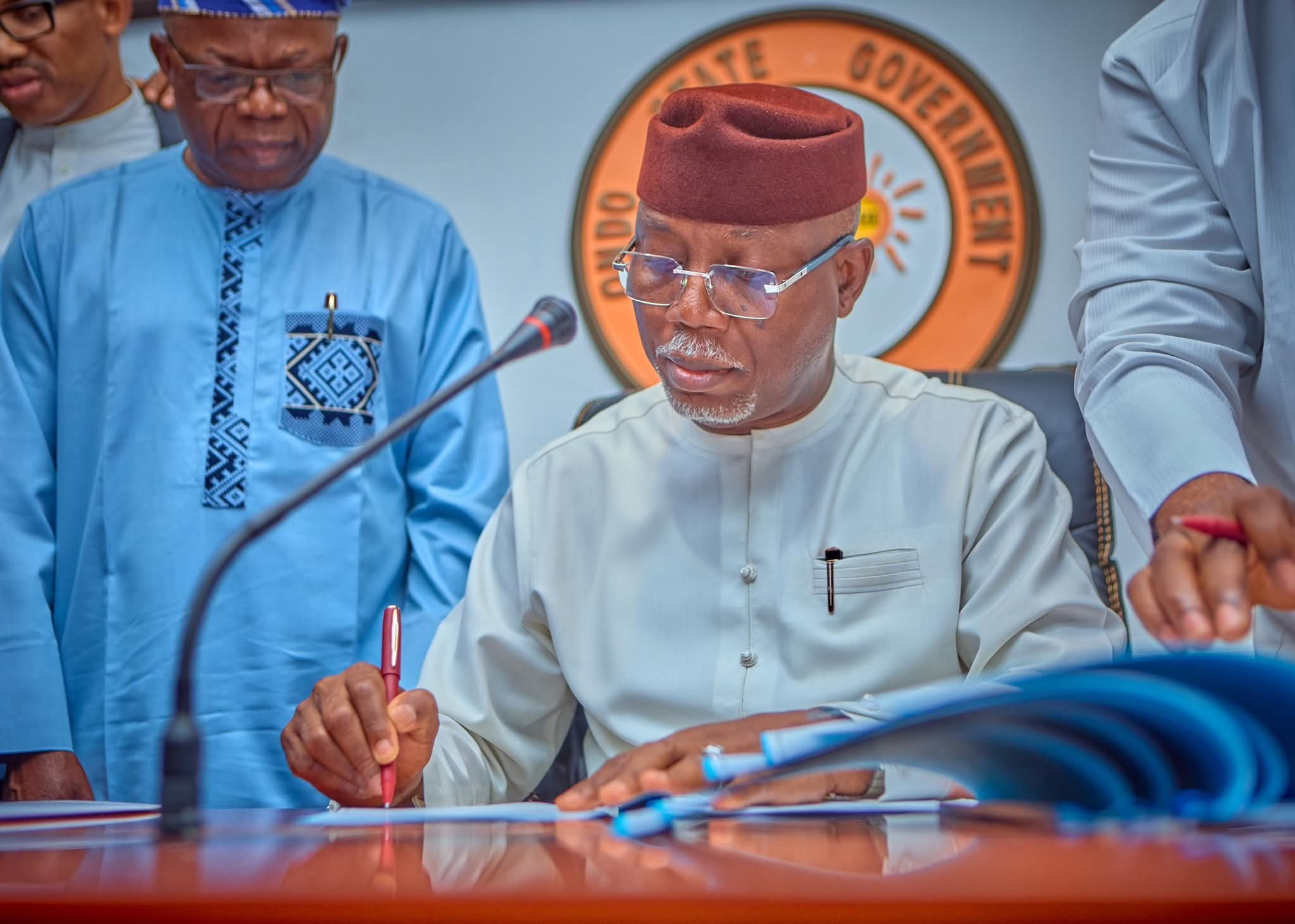

Ondo State Governor, Lucky Aiyedatiwa, has signed into law a new electricity legislation designed to attract private investment and improve the regulation of the state’s power sector.
The Ondo State Electric Power Sector (Amendment) Law, 2026, introduces a new regulatory structure for electricity generation, transmission and distribution, with the government seeking to expand access to reliable power across the state.
The legislation, which was recently passed by the Ondo State House of Assembly, modifies the 2020 power sector law and aligns the state’s electricity framework with the provisions of the Electricity Act, 2023.
One of the major changes introduced by the law is the creation of the State Electricity Regulatory Commission, which will independently supervise the electricity market and enforce operational standards.
The commission will oversee issues including electricity tariffs, licences, franchises, mini-grids, renewable energy projects and third-party investments. It will also approve and regulate facilities involved in electricity generation, transmission and distribution.
To strengthen the operation of the electricity market, the law provides for the establishment of the State Independent System Operator and the State Market Operator.
The legislation also introduces mandatory metering for electricity consumers, whether they are connected to the national grid or operate within off-grid communities. Electricity providers will be required to supply suitable meters and maintain direct commercial relationships with consumers.
In a move aimed at encouraging grassroots investment in electricity infrastructure, the law protects facilities financed by communities, associations and private investors from unlawful interference.
It further criminalises deliberate attempts to prevent certified electricity infrastructure from being connected to the grid. Anyone convicted of the offence, described in the law as “Electricity Infrastructure Expansion Sabotage,” faces a N2m fine, alongside a daily N25,000 penalty where the violation persists after official notification.
Another institution created by the legislation is the Equipment Standards and Competence Certification Agency. The agency will be responsible for examining and certifying electrical equipment and installations, as well as accrediting professionals and businesses operating within the electrical services industry.
The Ondo State Power Company has also been given a broader commercial mandate under the new framework, including participation in power generation, transmission and distribution ventures.
Its investment areas will cover mini-grids, renewable energy, independent distribution systems, small hydro projects and emerging energy technologies.
The legislation also contains provisions intended to reassure investors, including the possibility of granting defined exclusivity rights for approved power generation, transmission, distribution and related fuel infrastructure projects.
Power investments made by the state, its agencies, communities, individuals and other recognised stakeholders will equally receive statutory protection under the designation of “State Protected Investments.”
The Commissioner for Energy and Mineral Resources, Johnson Alabi, described the governor’s assent as a significant development in the state’s efforts to build a competitive electricity market.
Alabi said the law would position Ondo to benefit from the ongoing decentralisation of Nigeria’s electricity industry while creating opportunities for greater private-sector involvement.
He said the framework would also help improve electricity metering, safeguard investments, expand infrastructure and encourage the adoption of renewable and other alternative energy sources.
The governor, through his Chief Press Secretary, Ebenezer Adeniyan, reaffirmed his administration’s commitment to making electricity a major driver of industrialisation and economic growth in Ondo State.
The new law is expected to give investors greater confidence while providing the institutional framework needed to expand electricity supply and develop a more sustainable power market in the state.