
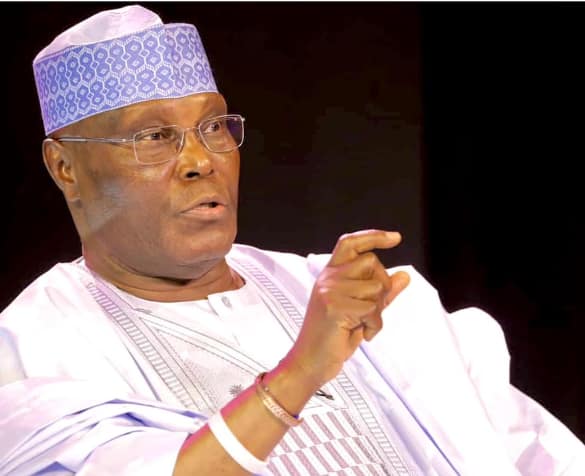

African Democratic Congress presidential candidate, Atiku Abubakar, has restated his commitment to restoring a form of petrol subsidy if elected in 2027, insisting that the policy he envisages would be different from the controversial system previously operated in Nigeria.
Atiku spoke on Tuesday in Abuja while hosting the Osun State leadership of the ADC, using the occasion to distance himself from aspects of comments recently made by his media aide, Paul Ibe, on the proposed policy.
The former Vice President said his position on subsidy remained firm, stressing that Ibe’s comments should not be interpreted as a formal statement of his policy position.
“On the question of subsidy, my position has not changed and will not change: I will restore it,” Atiku said, arguing that Nigeria had sufficient resources to protect its citizens from excessive economic hardship.
He said his proposed intervention was aimed at improving Nigerians’ purchasing power by reducing the cost of fuel and, by extension, transportation and food.
Atiku maintained that he was not proposing a return to the former arrangement in which government funds were used to subsidise imported petrol. Instead, he said the policy would be focused on supporting local refining and boosting domestic fuel supply.
His clarification followed an earlier interview in which Ibe said an Atiku administration would reintroduce subsidy temporarily and gradually withdraw it once the economy stabilised and domestic refining capacity improved.
Responding to the controversy, Atiku’s Senior Special Assistant on Public Communication, Phrank Shaibu, said the candidate’s proposal would involve a controlled and transparent intervention targeted at domestic production.
Shaibu explained that the arrangement would have spending limits, proper budgetary provisions and independent auditing, while government support would reduce as local refineries expand, fuel availability improves and market competition strengthens.
He argued that the objective was to provide temporary relief to consumers while creating conditions for the petroleum sector to eventually operate without such assistance.
The subsidy debate has become a major issue ahead of the 2027 elections, following President Bola Tinubu’s removal of petrol subsidy at his inauguration on May 29, 2023.
The decision led to a significant increase in petrol prices and was followed by rising transportation and living costs, although the Federal Government has maintained that the reform was necessary to reduce fiscal pressure and encourage investment.
Atiku criticised the manner in which the reforms were implemented, arguing that Nigerians were made to bear the immediate consequences without adequate protection.
He said his economic programme would instead seek to lower energy and transportation costs, strengthen local refining and improve the purchasing power of citizens.
Ibe had also explained that the proposed model could involve supplying crude oil to local refiners at discounted rates, allowing them to produce petroleum products more cheaply and pass the benefit to consumers.
The aide said such an arrangement could be monitored by government without returning to direct price fixing, with the ultimate objective of stimulating economic activity and making production more competitive.
Atiku’s latest clarification therefore places his proposed subsidy policy at the centre of a production-focused intervention rather than a restoration of the old import-based system.