
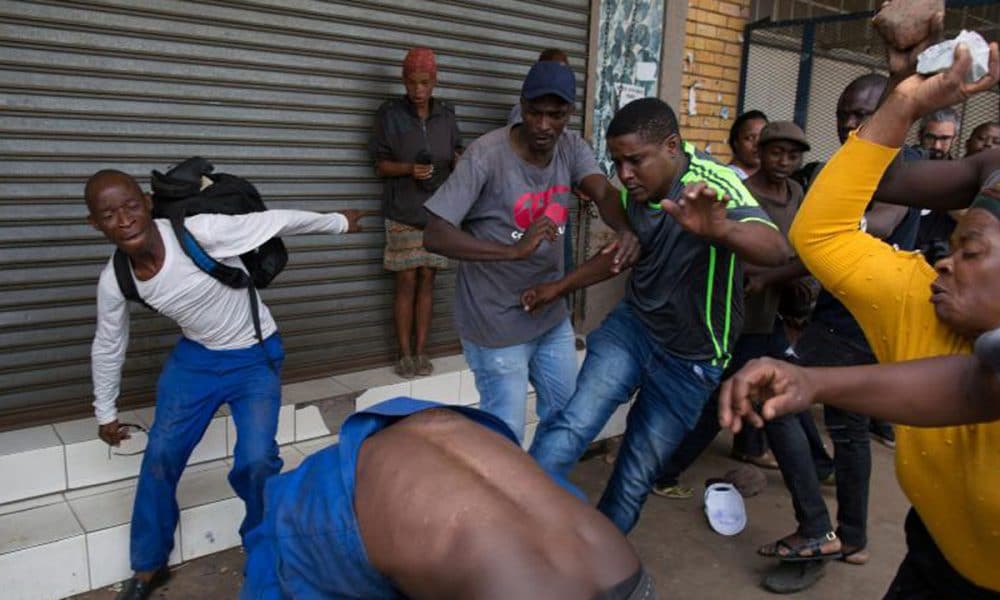

Nigerians living in South Africa have called for stronger diplomatic measures against the country over the alleged continued xenophobic attacks targeting Nigerians and other African nationals.
The President of the Akwa Ibom Indigenes Forum in South Africa, Akaninyene Willie, made the call while reacting to the Federal Government’s decision to suspend further official travels by its officials to South Africa.
Willie urged the Nigerian government to increase diplomatic pressure on South Africa, including demanding compensation of at least R1bn for every Nigerian allegedly killed and for businesses owned by Nigerians destroyed during xenophobic attacks.
Speaking by telephone, he said the demand was necessary because South African authorities had, in his view, failed to adequately address the damage suffered by Nigerians and other foreign nationals.
“We definitely want more pressure to be put on South Africa, considering the efforts Nigeria made towards their liberation. They have preferred to pay us back by killing and exhibiting hatred for us,” Willie said.
He also called for the intervention of the International Criminal Court if necessary, arguing that the African Union had failed to adequately address the situation.
“If possible, we would like the International Criminal Court, ICC, to be approached since the African Union is not helping us in any way,” he said.
Willie further appealed to the Federal Government and state governments to accelerate the evacuation of Nigerians stranded in South Africa, claiming that thousands were still awaiting repatriation.
“South Africa should be charged one billion rand for every Nigerian citizen killed,” he insisted.
A legal practitioner, Osai Ahiakwo, backed the demand for reparations but said the Federal Government’s restriction on official travel to South Africa, though justified, was not enough to protect Nigerians already living in the country.
Ahiakwo said the measure could serve as diplomatic leverage by demonstrating Nigeria’s displeasure and putting pressure on South Africa, but noted that it would not directly investigate killings, prosecute alleged perpetrators, protect Nigerians at risk or provide relief to affected families.
He therefore advised the Federal Government to use the travel restriction as a platform for demanding concrete measures from South Africa, including improved protection for Nigerians, investigations into reported killings and the prosecution of those found responsible.