
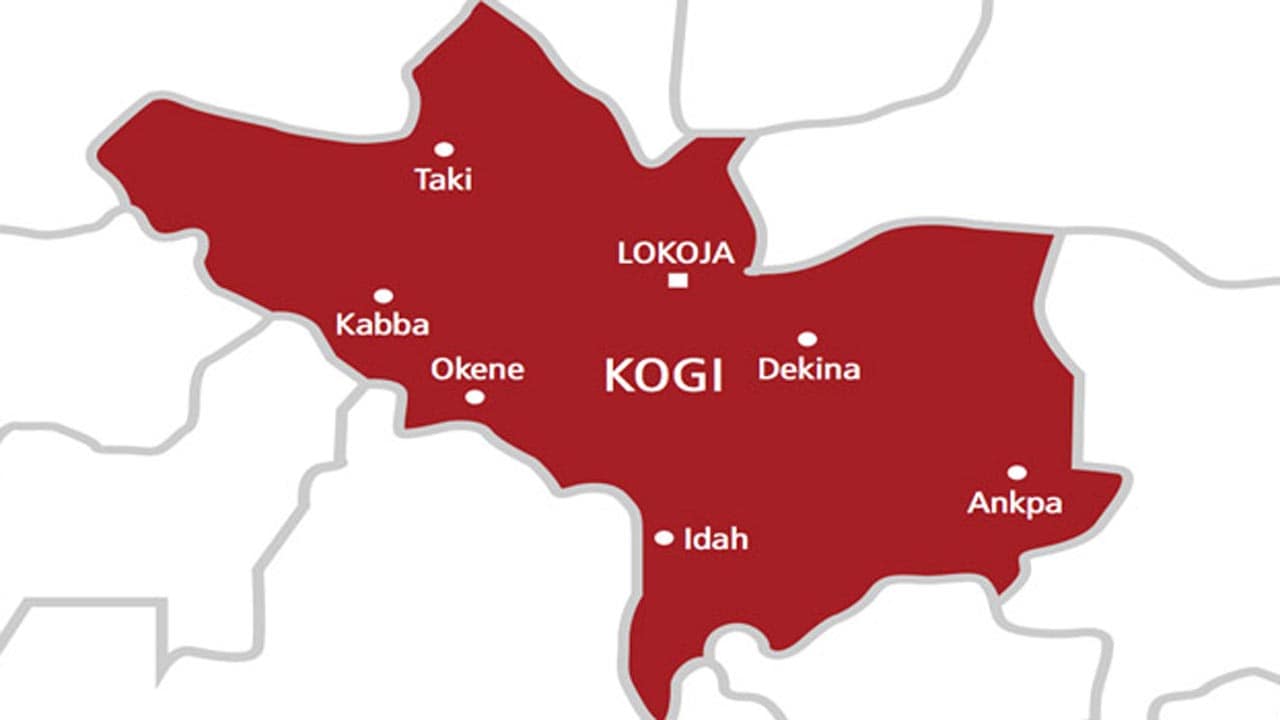

A woman in Ohuepe, Okehi Local Government Area of Kogi State, has recounted how she survived after allegedly eating an amala meal that claimed the lives of her husband and two children.
The three victims reportedly died on August 14, 2026, two days after consuming amala prepared from cassava flour.
The incident has raised concerns in the area, following another reported case in neighbouring Ikoyi community where four children allegedly died after eating food prepared from cassava flour.
The two incidents have reportedly claimed seven lives in less than two weeks, while several other victims are said to be receiving treatment in hospitals.
Recounting her experience, the woman, popularly known as Mama Rahama, said she bought the cassava flour from a local market and prepared the amala for her family’s dinner.
She said the family ate the meal and went to bed, but those who consumed it began experiencing serious health complications the following day.
According to her, her four-year-old son, Mikail, escaped because he refused to eat the meal.
“Except my four-year-old last born, Mikail, who refused to eat the food, my husband, Rahama, Rabiyat, Samad, Senani and Haliru ate the amala for dinner,” she said.
Mama Rahama explained that her husband and two of her children, Rabiyat and Samad, ate more of the meal, while she consumed only a small portion because she had recently been discharged from hospital and had little appetite.
She said the condition of the affected family members deteriorated rapidly, with severe weakness, vomiting and stomach pains.
She disclosed that four members of the family were eventually taken to Ado Ozuka Hospital in Ogaminana for treatment.
However, Rabiyat reportedly died first, followed by Samad and their father, all within a few hours on the same day.
Mama Rahama, who has since been discharged from the hospital, appealed to the Kogi State Government and members of the public to assist her family as it struggles to cope with the tragedy.
Meanwhile, another suspected food-related incident was reported in Ikoyi, Ihima, where four children from two families allegedly died after consuming amala prepared from cassava flour.
A resident, Al-Hassan Idris, said nine members of the two families ate the meal on Thursday evening, with some of them consuming the leftovers the following morning.
He said those who ate the food subsequently developed weakness before their conditions worsened, resulting in vomiting and stooling of blood.
According to Idris, the victims were rushed to hospital, but four children, two from each family, died.
Two of the children reportedly died on Friday, while the other two died on Saturday.
Idris added that a dog which was fed some of the leftover meal also became sick, vomited and subsequently died.
The incident has reportedly plunged the community into mourning and heightened fears among residents.
The Chairman of Okehi Local Government Area, Monday Amoka, said efforts were ongoing to save five other victims who were still undergoing treatment.
Amoka disclosed that samples of the suspected food had been collected and forwarded to a medical laboratory in Lokoja for analysis.
He said the laboratory examination would help authorities determine the actual cause of the deaths.
The Kogi State Government has also ordered an investigation into the incidents.
Governor Ahmed Usman Ododo directed the Commissioner for Health to conduct a comprehensive probe into the circumstances surrounding the deaths.
The Commissioner for Information and Communications, Kingsley Femi Fanwo, said the investigation would establish whether the food was contaminated or whether other medical or environmental factors were responsible.
He added that relevant samples and evidence would be subjected to appropriate public health investigations.
Meanwhile, a medical consultant in Lokoja, Dr Ahmed Okolo, called for urgent investigation into the source of the cassava flour used by the affected families.
Okolo advised authorities to trace the source of the flour and conduct laboratory tests to identify any potentially harmful substance.
He said the rapid deterioration of the victims meant that poisoning should be considered among the possible causes, although other explanations must also be investigated.
The doctor also recommended post-mortem examinations on the deceased to establish the precise cause of death.
According to him, autopsies could help determine whether a toxic substance was present and identify the effect it may have had on the victims’ vital organs.
Some residents, however, suggested that the deaths might not necessarily be linked to deliberate food poisoning.
They raised concerns about the possible consumption of a poisonous variety of cassava popularly known as bitter cassava, which can pose serious health risks if improperly processed.
Residents said similar incidents had allegedly occurred in Obeiba, Ikuehi and Ohuepe communities in recent months.
They urged the authorities to investigate the cassava varieties being consumed in the affected communities and determine whether contaminated or improperly processed cassava could be responsible for the deaths.